HERmitage

For 48 uninterrupted hours last week, I lived in a little cabin in the woods – alone, and, I repeat, uninterrupted. (Today my children do not have school, and so the “uninterrupted” part feels especially important as I remember my retreat.)

When I started taking solitary retreats a few years ago, I approached them with a sense of lofty significance. I expected a burning bush, a still small voice, a bright light, or some other monumental encounter of biblical proportions. But that has never been my experience. Instead, these retreats have become well-anticipated rest times, and that is plenty.

Attached to the tiny cabin is a screened porch with a solid comfortable Adirondack chair. I sit in the chair and gaze into the woods. A breeze softly shushes through the sleepy trees, who absentmindedly undress, leaf by falling leaf. It is always autumn when I take my retreat, not by my intent, but it always works that way. It is probably the rhythm of my life – summer is large and loud and light-flooded, and usually around the first of October I am ready for a very long nap.

I have always been an introvert. I’m not sure if there is a universal definition for this word, but for me, it means that spending time with people, which is something that is so very good for me (and which I usually enjoy!), takes more emotional energy from me than it does from people we call extroverts. In my young and restless high school and college days, my house was a headquarters for social gatherings, and I loved it. But often I would sleep fitfully after everyone went home, dreaming that all those people were still there, sitting around me on my bed; and I felt I should keep up the conversation, try to be fun and smart and beautiful, but the shy wild creature inside me had already pulled the shades and turned off the porch light.

A solitary retreat, then, is for me a complete pulling of the shades and extinguishing of the porch light, with no expectation from anyone that I will keep up appearances and maintain social graces. I bring my guitar, a pile of books and a few journals (I like to read over past ones and write in current ones). Usually I end up just sitting for long periods, going to bed early, sleeping in late, walking breezy forest trails and sunny prairie ones, and singing quiet songs now and then.

This time I read three books. First, I finished Grace (Eventually) by Anne Lamott, a former addict, recovering G.W. Bush-hater, single mother, pro-choice feminist, and lover of Jesus. Her writing always refreshes me because she is so not me. She sometimes feels like the mirror image of me – child of divorced nonreligious intellectuals, wild background, outspoken demeanor, whose adulthood devotion to Jesus never sat well with her mother. Next, Annie Dillard’s Holy the Firm, poetic prose that I enjoy like fine wine or rich baklava – slowly savoring each sentence. I try to set aside my own ambitions of writing when I read either of these Annes, because who needs that form of torture? Instead, I become a wholly abandoned, joyful reader, and it is good.

Then I tackled The Myth of Certainty by Daniel Taylor, a book the renegade professors at my fundamentalist Christian college used to praise. Fifteen years later, I finally got around to reading it. The subtitle is The Reflective Christian and the Risk of Commitment. For those who ask about breakthroughs or “what God did” on my retreat, I humbly and with no certainty but a risk-taking commitment say that I found great comfort and voice for much of my struggle with faith in this book. I’ll leave that for another post.

For now, I feel rested and just a little more practiced at peace, more able to hold a center of calm even on very interrupted days like this, when I hear my children in the kitchen bustling around, yelling, “Mom, we’re cooking!”
Further Thoughts on Redemption

Commenting on my last post, Nnox sees no grounds for a redemptive view of things. I said that redemption is not my observation of the way things (usually) work, but my hope. I wanted to add that this doesn’t make me a helpful optimist and Nnox a harmful pessimist. On the contrary, it has been mentioned by others with good reason that many people who believe in “happily ever after” tend to trivialize life (“so heavenly-minded that they’re no earthly-good”), while some who don’t believe or even hope in a happy ending to the cosmos are deeply-committed humanitarians and joyous lovers of life. In their perspective (as I understand it), birth to death is all we have, so we may as well enjoy it and do our best to help others enjoy their lives too.

But it’s painful to know that many – maybe most? – of the men, women, and children who live and have lived and will live on this planet have not, do not, will not enjoy a life like the one I was born to. I expect to eat whatever I want, go wherever I want, live wherever I want and with whomever I choose, have uncensored access to information, stay warm and dry, receive proper health care should I need it, and above all that, find my calling in life and live it out in a fulfilling way. It’s difficult even to make a list like this because all these “basic needs” are met without my really even thinking about it. It could be a book-length list. (When was the last time I felt grateful for the well-maintained streets in my town?)

So why do I get this, and a woman in Haiti does not? It regularly breaks my heart to gaze at my beautiful children, so safe and healthy, well-fed, well-dressed; and see in my mind’s eye pictures of another woman’s children starving.

Do I hope in redemption because it is a good excuse for me to get on with my beautiful life? Otherwise, how can I justify these discrepancies between my life and most other people’s lives? And yet, suffering seems hardwired into existence. If I live long enough, I will inevitably lose someone I love, become terminally ill or injured, or simply experience the pain of aging and the unknown cliff-edge of death as it looms ever nearer. If I don’t live that long, then I will have died young and tragically missed out on living a long, full life.

In earlier years of my life, awareness of the pain and loss and seeming futility of existence would drive me to tears, moodiness, some winter evenings even to what felt like the brink of sanity.

Then I had children, and after the predictable (for me) post-partum blues with my first child, the dark and heaviness lifted. Why was that? Is it a typical survival instinct, something to ensure I bring up nurtured and well-adjusted children – who will at some point learn enough about history and current world affairs to question me about my beautiful life and insensitivity to the suffering of others?

My ready response is, “I am not God. Even if I devoted all of my energy and resources to lifting others out of suffering, it wouldn’t be enough. So I’ll live with the painful awareness of worldwide suffering, and make lifestyle choices with that in mind. I won’t try to shield my children from the truth. And I’ll hope in redemption, because to be aware of so much senseless violence and global inequity, and not to trust in a final remembrance and making-right of all this wrong, will either desensitize me or drive me to insanity.”

And so, perhaps I am a good illustration for those who hold that God is an invention of the human psyche. Maybe this is just the best coping mechanism we as a species have yet come up with. It is certainly a persistent one.

Some people say that God speaks to them often. What do I know about that? I have no grounds for disagreement. I’m not sure I’ve ever heard God speak, but there are three distinct times when I thought it might have been God – and these are the words I heard:

“They don’t own me. And neither do you.”

“Take your time.”

“Don’t be scared.” (yes, “scared” is what I heard, not “afraid;” let the reader decide whether this could possibly be the language of a proper God!)

No tidy conclusion here. Further thoughts tend to lead to further questions, and this post is a prime example.

The Good, the Bad, and the Younglings

Danny DeVito made a movie in 1996 called Matilda, based on a book of the same name by Roald Dahl. A copy of this movie wound up in the bargain bin at a local video store, where my mother was browsing for something to entertain her grandkids so we adults could spend an evening in conversation which included complete sentences. My six-year-old daughter Luthien told me later about the movie and how much she liked it. Her favorite parts, which she described repeatedly, sounded lame to my adult sensibilities.

Typical kids’ story, I thought. Poor little child misunderstood by her parents (at least not orphaned like so much of children’s literature). People are either mean or nice, and she has some sort of magical powers to help her through her ordeals.

A week later when we took the kids to my parents’ house for a movie night, and Luthien asked to see Matilda again, I groaned and asked if we could please see something everyone would enjoy, not just the kids. But, poor misunderstood-by-my-parents me*, I was outvoted. On with the show.

Maybe it helped to have my enthusiastic fresh-faced daughter at my side, and her excessively giggly little brother primed to let loose at all the silly parts. I’m sure Danny DeVito and Rhea Perlman playing the outlandish parents helped too. Whatever it was, it turned out to be a fun movie to watch together with my kids. I gave my grown-up critic the night off and joined with my kids in relieved laughter when the victorious school children chased away their mean principal once and for all, hurling the contents of their lunch bags like a G-rated mob.

Later, when the grown-up critic came back from her night out and the kids were asleep, Nathan and I had a conversation (which included complete sentences).

“That movie bothered me,” Nathan began. “All those flat characters – the perfectly mean principal, the perfectly good teacher, named Miss Honey even?! Where’s the redemptive value in a story like that?”

Both of us having only in adulthood discovered subtlety (I love Jodi’s post about this), Nathan and I appreciate stories that humanize people. We remind ourselves and our children almost daily that there are no “bad” people and no “good” people – that every person is a complex being marbled with good and evil.

Classic children’s literature, however, does not often concur. Many of these stories tell about good people (who are usually underdogs and often children) winning by destroying bad people. We see it often in today’s movies for kids too. Up, which was a fun story idea and colorful and interesting to watch, disappointed us for the same reason. The bad guy, apparently, had to go.

Not all children’s stories conform to this standard, but in those that take the conflict of good versus evil as their theme, good and evil are often personified and therefore become polarized characters. Therefore the good character must destroy the bad character for good to triumph over evil. In a more complex story, the good character may do bad things (like Edmund in the Narnia chronicles), but ultimately that character will exhibit his/her inherent goodness through repentance. If there is character development, it will most likely be the good characters who get developed, and not the bad.

At least, that is the explanation I came up with when Nathan and I had this conversation and I tried to understand why children’s stories are not often redemptive.

No expert on childhood psychology (of which, as the parent of small children, I am more painfully aware than ever), I’m pretty sure I’ve heard somewhere that children are concrete thinkers; and I think this means that subtlety just isn’t something they get. So, maybe these stories help to cement into their concrete thinking the persistent human belief that no matter the odds, good will overcome evil in the end.

And maybe subtlety is something to be gained through maturity, interacting with the world, listening and observing others. Maybe the understanding that every person – and every situation – is complex and has something beautiful as well as something ugly or dangerous or evil in it can only come through experience, cannot be transferred through external teaching.

Taking this viewpoint, I think that Avatar should be classified as a children’s story (a highly interesting, predictably violent and visually stunning one) while Star Wars is for mature viewers.

Then again, even in Star Wars, the bad guy known as the Emperor never gets redemption. And maybe Darth Vader would just be classified as a good guy doing excessively bad things for an excessive amount of time until he repents and gets to be immortalized as good.

I dunno. It just feels deeply right and true to me when, as the Doctor triumphantly said in one of my favorite Doctor Who episodes, “Just this once, everybody lives!”

*Uh, Mom . . . Dad . . . my tongue is firmly in my cheek here. (Can’t afford to lose my biggest fans!)

Name, Schname

There is a theory that extremely outgoing people tend to forget other people’s names, while more quiet and shy types keep better track of details like names, even of people they have hardly interacted with.

Take, for example, my kids. Six-year-old Luthien, whose first question in the morning is, “Mom, where are we going today? Who are we going to see?” sometimes forgets the names of the neighbor girls who she plays with almost every day. Three-year-old Silas, on the other hand, not problematically shy but not outgoing like his sister, will talk about someone by name who he met once nearly half his lifetime ago.

They proved the theory again recently, when they both attended the first day of Vacation Bible School at a church where they don’t know anyone. At dinnertime I asked them, “what are your teachers’ names?”

“Miss Cara!” Silas said at once.

“How about yours, Lu?”

“Um, I don’t remember.”

I laughed but reassured her that it’s okay. Growing up a shy girl, I knew everybody’s name, and could remember names long past what seemed an acceptable time period. I felt like a stalker, having met someone once, forever destined to know their name even after they would naturally have forgotten mine (if they ever even knew it!). Sometimes I even pretended to have forgotten someone’s name, just to keep from creeping people out.

Maybe getting older is the biggest factor at work now, but as I’ve practiced overcoming my shyness and made more of a point to connect with people, I have more trouble remembering names too! Or maybe it’s a result of moving to Minnesota when I was ten, and I have now reached overload trying to process all the ways to spell and pronounce variations of the name “Kristen” and “Kari”, along with the plethora of Andersons and Andersens and Johnsons and Jensens and Jensons, Petersens and Petersons.

Ah well. You’re all lovely, every one. Now, remind me of your names again?

Guest Post – My Mother’s Hands

Let’s stretch out Mother’s Day one more day, shall we? Here is a poem my mother wrote for her mother, and she gave me permission to post it here.

My Mother’s Hands
By Rebecca of Vista Glen Farm [copyright 2010 Rebecca Benner Tindall]

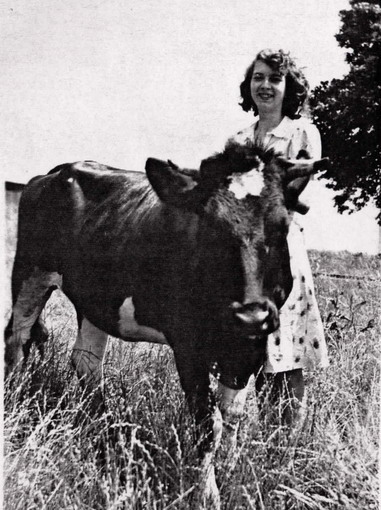
Thelma Benner (my Grammy), a young Pennsylvania farmgirl

My mother’s hands have
Guided a tractor across a stubbly cornfield

Shoveled manure in a smelly cow stall

Scattered cracked corn in a chicken house
Hoed stubborn weeds in an asparagus bed
Turned hard Pennsylvania clay soil to plant a flower bed
Gripped a pump handle to fill a bucket with water
Plucked a chicken and seared off the pin feathers with a candle

My mother’s hands have
Washed the grimy little hands and faces of daughters who made mud pies
Turned the crank of a wringer washer
Rinsed, washed and folded thousands of diapers
Hung little dresses, undershirts and socks in a row on the wash line
Sewed detailed clothes for all sizes of doll babies
Cut the fabric, designed and stitched matching Easter outfits for her little ladies
Scraped, washed, rinsed, and dried stacks of Thanksgiving dishes

My mother’s hands have
Canned the sweetest peaches in the world
Opened a jar of mouth-watering canned cherries
Chopped vegetables for a fresh batch of Pennsylvania Dutch piccalilli
Rolled out crust for a tasty apple pie
Poured a cold glass of milk for a little girl from an old mayonnaise jar

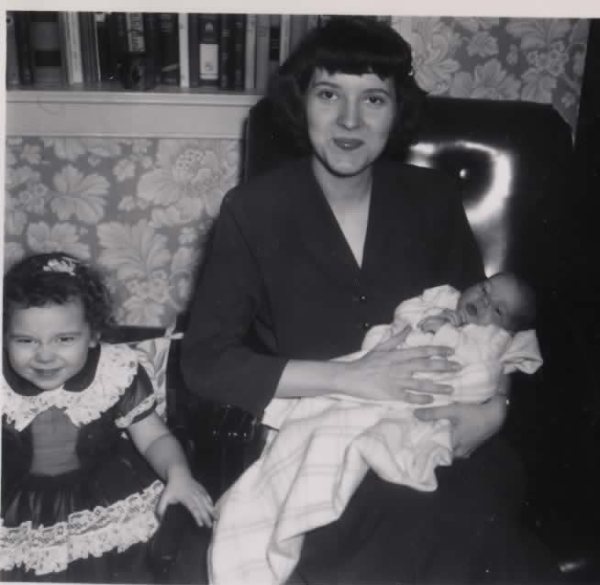
Thelma with daughters Debby and Becki

My mother’s hands have
Rocked a lapful of little girls
Felt the hot forehead of a daughter with rheumatic fever
Changed the cloth diapers of four baby daughters
Tested the milk for a night-time bottle
Held the big Bible story book for bedtime reading
Washed out with soap the mouth of a naughty little girl
Poured bubble bath into a big white tub for squealing little ladies
Tucked in the covers around her little daughter’s leg braces

Sam, Thelma and their daughters

My mother’s hands have
Packed a lunch box with a bologna sandwich and an apple
Filled a thermos with farm-fresh milk
Lined up Sunday School papers on the refrigerator
Written checks for school photos
Signed permission slips for field trips sent home by the teacher
Checked the math on little girls’ homework assignments
Filled a jar with water for fresh-picked dandelions

My mother’s hands have
Dribbled a basketball
Strummed the strings of a Hawaiian guitar

Clicked away on the keys of a manual typewriter
Done the bookkeeping for a basket manufacturer
Lifted a patient in a nursing home
Wiped the noses of her nursery school class

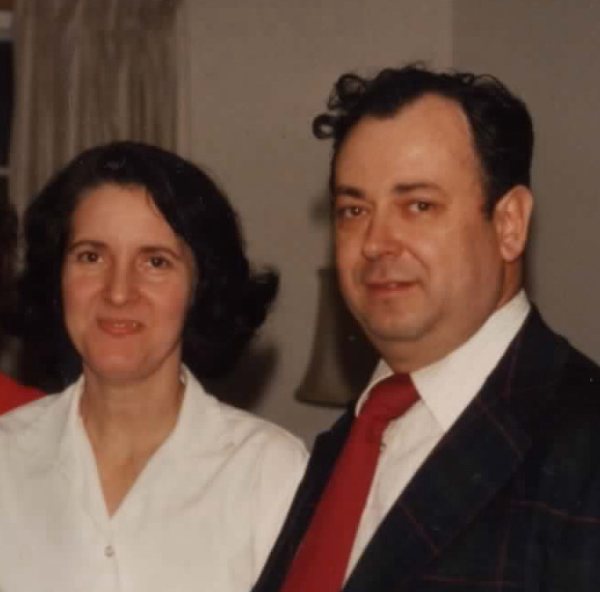
Thelma and Sam 25th annviersary

My mother’s hands have
Held the test results that pronounced the sentence of cancer
Spent all her savings on medicine hoping to prolong the life of her daughters’ daddy
Adjusted the covers of her dying middle-aged husband
Torn up old sheets to make bandages for his oozing sores
Tenderly held her husband when she kissed him goodbye
Held the death certificate of her lover and friend
Laid a flower on his casket
Wiped away tears of sorrow and loneliness

My mother’s hands have
Gripped her Bible late at night under a dim lamp
Clasped together in prayer asking God for money to pay the utilities
Opened old jars of canned peaches to feed hungry children
Accepted a bag of potatoes from a friend
Poured a glass of water for a deacon visiting his assigned widow

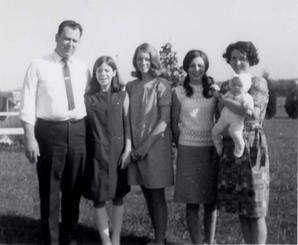
Great-granddaughter, son-in-law, Grammy, grandson (behind her - really, not great-grandson, but my cousin!) 2008

My mother’s hands have
Blessed four daughters
Cradled four granddaughters, six grandsons and one great-nephew
Touched the faces of eight great-granddaughters and five great-grandsons (so far)!

I love you, Mom.
Happy Mother’s Day, May 9, 2010
From your Blue-Eyed Girl, Rebecca Jane.