Name, Schname

There is a theory that extremely outgoing people tend to forget other people’s names, while more quiet and shy types keep better track of details like names, even of people they have hardly interacted with.

Take, for example, my kids. Six-year-old Luthien, whose first question in the morning is, “Mom, where are we going today? Who are we going to see?” sometimes forgets the names of the neighbor girls who she plays with almost every day. Three-year-old Silas, on the other hand, not problematically shy but not outgoing like his sister, will talk about someone by name who he met once nearly half his lifetime ago.

They proved the theory again recently, when they both attended the first day of Vacation Bible School at a church where they don’t know anyone. At dinnertime I asked them, “what are your teachers’ names?”

“Miss Cara!” Silas said at once.

“How about yours, Lu?”

“Um, I don’t remember.”

I laughed but reassured her that it’s okay. Growing up a shy girl, I knew everybody’s name, and could remember names long past what seemed an acceptable time period. I felt like a stalker, having met someone once, forever destined to know their name even after they would naturally have forgotten mine (if they ever even knew it!). Sometimes I even pretended to have forgotten someone’s name, just to keep from creeping people out.

Maybe getting older is the biggest factor at work now, but as I’ve practiced overcoming my shyness and made more of a point to connect with people, I have more trouble remembering names too! Or maybe it’s a result of moving to Minnesota when I was ten, and I have now reached overload trying to process all the ways to spell and pronounce variations of the name “Kristen” and “Kari”, along with the plethora of Andersons and Andersens and Johnsons and Jensens and Jensons, Petersens and Petersons.

Ah well. You’re all lovely, every one. Now, remind me of your names again?
Also Ran

Sunshine and snow, fresh air and movement beat sitting in front of a light box any day. I’m not about to dispute the existence of seasonal affective disorder (SAD), or even traditional medicine’s high-tech ways of treating it.

All I’m saying is that after a run on a sunny day in a snowy place, I come home floating.

Running has been a comfort source throughout my life, a primal behavior I turn to when life gets complicated. Of course I ran as a child – didn’t we all? Then in adolescence, overdosed on Rocky movies and determined to stop sitting the volleyball bench, I ran again, and was not disappointed. Throughout my young adult life, changes and difficulties and disappointments have thrust me out of the house, running away, chasing down solutions, rocking my inner child to the elemental rhythm of breathing in and out, pumping legs up and down.

Christopher McDougall has written a love story-science lesson-history-sociological study-adventure tale about running that has jolted me even more joyfully out the door these days. Reading his book Born to Run has left me feeling like Forrest Gump, (“runninG” with a good hard “g” at the end); or like Silas, my three-year-old, who spontaneously runs back and forth the length of our house while telling stories about himself, every day, often a few times a day. Like a ten-year-old, I read McDougall’s tale of running with ultra-marathoners and Tarahumara Indians, twenty, fifty, a hundred miles down the trails, and I am right there with them. I am Scott Jurek, the vegan ultra-runner stocking his fanny pack with pitas and hummus rather than high-falutin’ power gels. No, wait, I am Barefoot Ted, caressing terra firma with my bare soles. But then, too, I must be Ann Trason, 5’4″ and unstoppable, dubbed “La Bruja” (the witch) as she zooms past legendary Tarahumara running men including Juan Herrera and Martimano Cervantes in the Leadville Trail 100.

Ten-year-old me, immersed in other people’s stories, thrusts 34-year-old me out into the sunny snowy February day, and as together we chase down Scott and Ted and Ann, my head clears, my heart pumps, and I am me, alive and free and really me, also born to run; and my three miles through the parks of this Midwestern prairie town is brilliant, right up there with sex and drugs and rock and roll – except the drugs, that is, because this kind of inhaling is actually good for me, my favorite drug to treat my level of SADness.

Fighting February

In the hot and busy hustle of growing, harvesting, and preserving summer’s bounty, winter sounds like a dreamy relaxing bubble bath. There I am in my mind’s eye, serenely lounging in a rocking chair, wrapped in a cozy blanket, backlit with candlelight. On the table next to me steams a mug of green tea, next to a small dish of dark chocolate and crystallized ginger from which I occasionally eat. I am reading Plato’s Republic. The children are in bed, my lover is softly strumming a guitar on the couch. The dishes are washed, the laundry is folded and put away, there is a pot of beans soaking for tomorrow’s dinner.

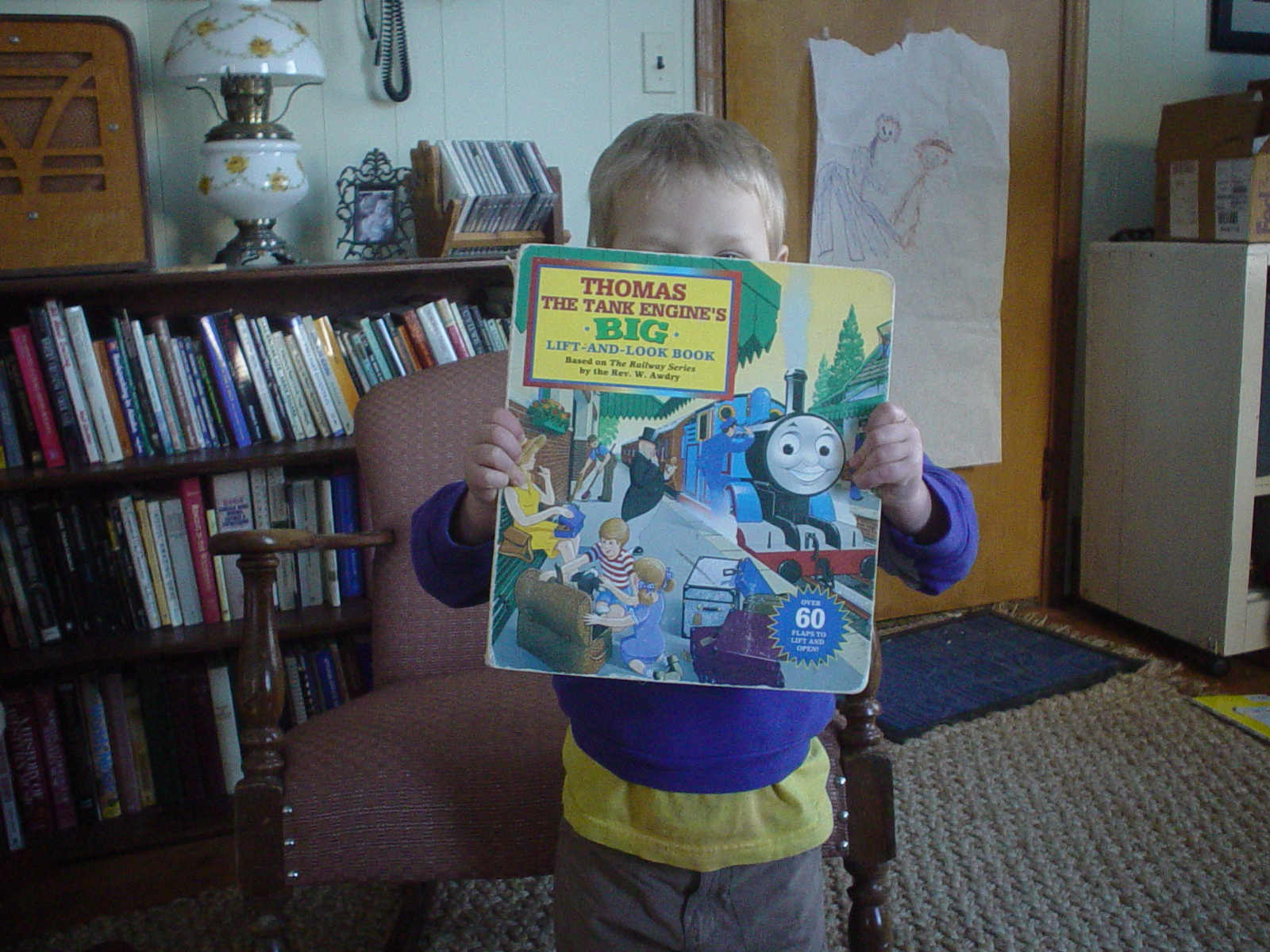
In February, the actual scene might look more like this: I am in a rocking chair, holding a book. It is not Plato’s Republic, but Thomas the Tank Engine’s Big Lift and Look Book. One child is on my lap because he was biting his sister at bedtime. The other is screaming that she is scared to be alone in her room. My drink of choice is Kahlua and cream, but I already drank it all. I didn’t bother putting the chocolate and ginger in a dish, but just ate them out of the bag while standing in front of the kitchen cupboard, keeping my back strategically turned towards the always-underfoot children. Dirty dishes are piled around the sink, and my husband is folding laundry on the couch. It’s looking like tomorrow’s dinner will once again be baked potatoes and carrot sticks. But at least I’ve got those jars of tasty ketchup that I canned in the summer.

For years now, I have regretted that Christmas is celebrated so early in the winter. Couldn’t people have waited until winter got good and nasty to have a big celebration? In December, even here in Minnesota, we can never be sure if we will even have snow for Christmas. In February, it’s a sure thing. In February, I am hungry for something to celebrate. I have become half-bear, convinced that hibernation would solve all my troubles. I, who love to get out of bed and go for a run at 5:00 on summer mornings, can hardly roll over by 8:00 on February mornings. I feel sleepy, swollen, and stupid; weary of the piles of clothes from which I must exhume myself every night for bed, weary of shoveling snow, weary of refereeing the ridiculous arguments and murderous brawls my small children have made their full-time occupation.

I know, the Christmas celebration lines up with the winter solstice, celebrating the return of the sun and longer days. And I do feel a glint of joy in February when I notice it is 5:00 and the sun is still shining. But, oh, how lovely it would be in February to saturate the house with the crooning of Nat King Cole, bake up a passel of Christmas cookies, fill up the calendar with parties and . . . the kids’ room with newly opened presents . . . and . . . hey, wait a minute, that sounds exhausting.

Skip it. The afternoon winter sun is radiating through the window, and I can just sit here and let it warm me, with no mental stress over cookies I’m not baking, parties I’m not planning, or even weeds I’m not pulling or gorgeous summer day I’m not taking full advantage of. I’ll bet there will be brilliant stars out tonight, with moonlight glowing over the snow. Alright, February, I surrender.

Winter Gardening

Under the snow is buried treasure.

Breathing cold quiet sterile air, I remember that in the ground are the hearts of the plants I happily nurture during the warmer months. I see the past and also the potential. Winter is the canvas for my gardening dreams, which makes this season precious. The work of the dreaming season is to build the desire that fuels the hard work of the growing season.

I remember where everything grew, and I recall my dreams of last winter. Some of them I carried out in the growing season, some changed shape, some were discarded, some set aside for another year. Now I file through the ones set aside. I reimagine the landscape, fill it in with memories and dreams.

Standing there in the quiet and the white, anything is possible. The sky is the limit in this moment when I need no money, no time, no muscle or tools to do the work that’s needed – the dreaming.

“Our Need for Everything . . . “

This morning I am reading Saving Paradise: How Christianity Traded Love of This World for Crucifixion and Empire (Rita Nakashima Brock and Rebecca Parker) and came across these words quoting Ephrem the Syrian (c. 306-373):

“The inhabitants of the world fill in the common need from the common excess. We should rejoice in this need on that part of us all . . . Our need for everything binds us with a love for everything.”

I’m thinking today of the World Vision Christmas catalog that my young daughter Luthien and I were paging through a few days ago. You could buy medicine for sick children, food for hungry ones, animals to provide a livelihood for destitute families – and while the pictures were vibrant with joy and my daughter was enthusiastically deciding what she wanted to give, I found myself crying as page after page lengthened the list of needs. There is no way our family can give enough to meet all those needs.

But what a preposterous idea! Our family is one small piece of this circle of love and need. How often I forget, in this individualistic culture, that no one person or family or group is charged with saving the world. Neither is anyone only needy or only loaded with gifts for others. We are all of us needy, and we can each give something – a smile, a well-spoken word, a sum of money, a box of food, an hour of our time – as we affirm the life, the need, the beauty, love, and pain that make up the reality of the world in which we live.

May we all be courageous enough to live more faithfully within this circle of need and love, of vulnerability and generosity.