Fighting February

In the hot and busy hustle of growing, harvesting, and preserving summer’s bounty, winter sounds like a dreamy relaxing bubble bath. There I am in my mind’s eye, serenely lounging in a rocking chair, wrapped in a cozy blanket, backlit with candlelight. On the table next to me steams a mug of green tea, next to a small dish of dark chocolate and crystallized ginger from which I occasionally eat. I am reading Plato’s Republic. The children are in bed, my lover is softly strumming a guitar on the couch. The dishes are washed, the laundry is folded and put away, there is a pot of beans soaking for tomorrow’s dinner.

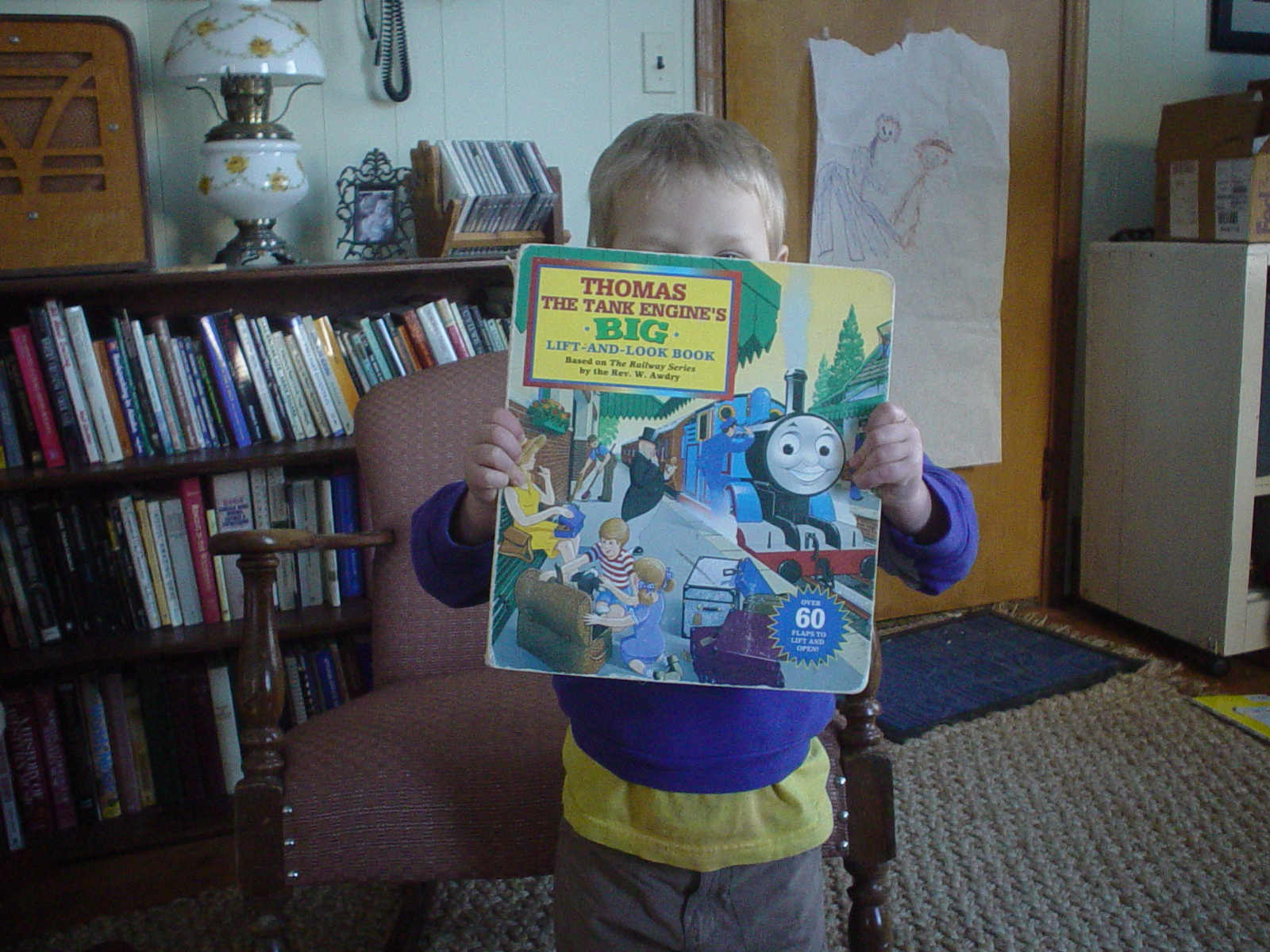
In February, the actual scene might look more like this: I am in a rocking chair, holding a book. It is not Plato’s Republic, but Thomas the Tank Engine’s Big Lift and Look Book. One child is on my lap because he was biting his sister at bedtime. The other is screaming that she is scared to be alone in her room. My drink of choice is Kahlua and cream, but I already drank it all. I didn’t bother putting the chocolate and ginger in a dish, but just ate them out of the bag while standing in front of the kitchen cupboard, keeping my back strategically turned towards the always-underfoot children. Dirty dishes are piled around the sink, and my husband is folding laundry on the couch. It’s looking like tomorrow’s dinner will once again be baked potatoes and carrot sticks. But at least I’ve got those jars of tasty ketchup that I canned in the summer.
For years now, I have regretted that Christmas is celebrated so early in the winter. Couldn’t people have waited until winter got good and nasty to have a big celebration? In December, even here in Minnesota, we can never be sure if we will even have snow for Christmas. In February, it’s a sure thing. In February, I am hungry for something to celebrate. I have become half-bear, convinced that hibernation would solve all my troubles. I, who love to get out of bed and go for a run at 5:00 on summer mornings, can hardly roll over by 8:00 on February mornings. I feel sleepy, swollen, and stupid; weary of the piles of clothes from which I must exhume myself every night for bed, weary of shoveling snow, weary of refereeing the ridiculous arguments and murderous brawls my small children have made their full-time occupation.

I know, the Christmas celebration lines up with the winter solstice, celebrating the return of the sun and longer days. And I do feel a glint of joy in February when I notice it is 5:00 and the sun is still shining. But, oh, how lovely it would be in February to saturate the house with the crooning of Nat King Cole, bake up a passel of Christmas cookies, fill up the calendar with parties and . . . the kids’ room with newly opened presents . . . and . . . hey, wait a minute, that sounds exhausting.

Skip it. The afternoon winter sun is radiating through the window, and I can just sit here and let it warm me, with no mental stress over cookies I’m not baking, parties I’m not planning, or even weeds I’m not pulling or gorgeous summer day I’m not taking full advantage of. I’ll bet there will be brilliant stars out tonight, with moonlight glowing over the snow. Alright, February, I surrender.

Sustaining Motion

I used to believe that with the right amount of effort, therapy, money, discipline, and time, I would achieve the perfect state and then maintain it. I would live in the right town, in the perfect house, with the right person, drive the right car to the perfect job, be the right weight, achieve the perfect hairstyle, have the furniture arranged and the yard landscaped just right . . . and then hold that pose – forever! Perfect! Permanent!

One moment in the life of my late grandmother, Hazel Dominguez Tindall.

One frozen moment in the life of my late grandmother, Hazel Dominguez Tindall.

But not possible. Nothing is ever standing still. My body moves involuntarily with every breath, my heart pumps without my conscious consent, my cells are factories in constant production. Even when I die, my body will not be still, as decay takes over and every atom moves on to become part of something else. The earth on which I stand spins at nearly 1,000 miles per hour, one small mover in a vast expanding universe.

Plenty of movement is required simply to sustain life. But the time and place where I live has “progressed” to a state far beyond simple sustenance. I can get anywhere in the world in a matter of hours or days, learn about anything with a few mouse clicks, communicate my ideas through a plethora of instant media options. Because so much is possible, it takes plenty of energy for me simply to sift through it all, to decide what I will do, buy, wear, eat; and to deal with my own and other people’s expectations and reactions to my choices.

With all this motion around and within me, I find deep healing in the disciplines of rest and reflection. Rest is not perfect stillness, but a deliberate slowing down, setting aside the oars and moving with the water rather than forcing my way through. Reflection is not absolute silence, but a thoughtful tuning out of the noises I ordinarily attend to, so that I can listen to the echoes of the recent moments through which I’ve moved.

Beneath all the layers of progress-driven sound and light, life is still a flowing river. The more I try to hold a living thing in a freeze-frame squeeze, the more energy I must expend – and even as I inflict any level of un-natural stasis upon that thing – be it my face, a relationship, a belief system or a zucchini, it slowly begins to wither in my grasp – or speeds up the natural rhythms that end in death, another way of saying the same thing.

This is why the bugs and baby bunnies my daughter captures usually convalesce until either they are released or they die. It explains why my marriage has suffered seasons of stagnancy, and why the fresh greens I stash in my refrigerator often need to be re-classified as compost.

Healthy living things are always growing. Evolution is the heartbeat of life. We deny the goodness of life when we try to force living things to stand still. Paradoxically, we affirm the goodness of life when we regularly and deliberately slow the pace we’ve picked up trying to keep up with those Joneses, and choose instead to move with the rhythm of the forces that sustain us.

A Long Line, Redirected

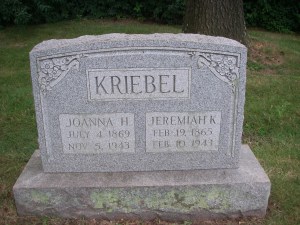
Joanna and Jeremiah Kriebel, my great-great-grandparents

The headstone for my great-great-grandparents’ grave

Last month our family spent a week in and around Lansdale, Pennsylvania, visiting relatives in the land where my parents grew up. Nearby Philadelphia was the childhood home of my dad’s mother, whose own parents had come there from New York, and originally from Cuba (her father’s side) and Austria (her mother’s side). His father grew up an Ohio farm boy who joined the Navy young and moved his family around many times before settling near Lansdale when my dad was a small child.

My mother, however, was born in this area, as were her parents, her grandparents, her great-grandparents, and so on, back to the ancestor who arrived at the port of Philadelphia in 1734, on the ship St. Andrew, which carried German people known as Schwenkfelders seeking religious freedom.

While we were in Lansdale last month, my mother, my two children and I went to visit the Schwenkfelder Library and Heritage Center, where we connected more deeply with our roots and also knocked over a mannequin and climbed on things we weren’t supposed to (Mom and I did the connecting; Lu and Si did the knocking and climbing).

Afterwards, we stopped at the Towamencin Schwenkfelder Cemetery, which lies at the end of a short lane off a busy road which just happens to be Valley Forge Road, along which the Liberty Bell made an escape from Philadelphia to Allentown during the Revolutionary War.

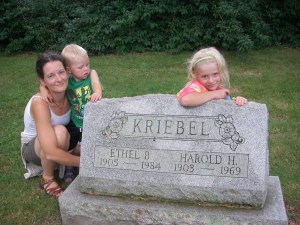
The cemetery is surrounded by housing developments now, but at one time all that land was Vista Glen Farm, handed down the Schwenkfelder line from the 1700s until my mother’s grandparents, Harold and Ethel Kriebel, retired from farming and sold the land. When she was a small child, the age my daughter is now, my mom (a.k.a. “Little Becki” in the stories she tells my children) lived on that farm with her parents and older sister in one side of the farmhouse, and her grandparents in the other.

Luthien, Silas, and my mother, "Little Becki"

Luthien, Silas, and my mother, “Little Becki”

Here on this land, Little Becki played and explored. On the day we visited, grown-up Becki cried, flooded with memories as she stood in front of a row of gravestones resembling a series of books – the headstone of her grandparents, next to that of her great-grandparents, next to that of her great-great grandparents.

Her own mother, my grandmother Thelma, will probably not be buried here, because she made a choice that redirected the long line of German Schwenkfelder roots that she could trace back to the 1500s. Thelma married a Mennonite boy named Sam, who died when I was four and is now buried elsewhere. I imagine she wants to lie down next to him when it’s time. Until I stood in front of that headstone series, I hadn’t felt the significance of my grandmother’s redirection of the line.

There are six Schwenkfelder churches in the world, with roughly 3,000 members, and all are in southeastern Pennsylvania, where the Society of Schwenkfelders was formed in 1782. This is a long-held, short-ranged tradition. When Thelma married that Mennonite boy Sam, and together they joined the independent Baptist church, it forever altered the line. Now I, two generations removed, stand on the outside of the religious tradition of my forebears, looking in. Instead, I grew up an insider to the fundamentalist tradition towards which my grandparents turned the line, often wanting out.

Me, Silas and Luthien at my great-grandparents' gravestone, Towamencin Schwenkfelder Cemetery

Me, Silas and Luthien at my great-grandparents’ gravestone

But I would not exist at all had it not been for her love and life with Sam, or for their little Becki’s union with Larry, my father. And now, because I chose Nathan, the son of Steve who himself redirected a long line of Minnesota Swedish immigrants by marrying JoAnne, there are two beautiful people in the world named Luthien and Silas.

Lately I’m very interested in tracing these lines. I’ve started searching for more genealogy information not just for my family but also for Nathan’s, and I find it fascinating to learn about the people from whom my children are descended.

Just as fascinating, I expect, are the people who may yet live because of the straightaways, twists and turns these lines have yet to take. They are lines of genes, traditions, ideas, sins and good works. Passed down the generations, woven in every union, birthed in every child, they make a living, changing, collaborative work of art full of beauty and shame, glory, struggle, pain and pride.

These lines are only in our hands for a little while. May we hold – and redirect – them well. And thank God they can always be redirected, or held, further down the line.