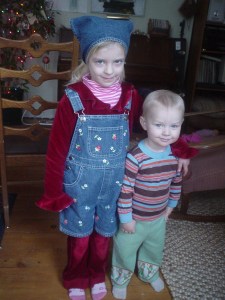
Fighting February

In the hot and busy hustle of growing, harvesting, and preserving summer’s bounty, winter sounds like a dreamy relaxing bubble bath. There I am in my mind’s eye, serenely lounging in a rocking chair, wrapped in a cozy blanket, backlit with candlelight. On the table next to me steams a mug of green tea, next to a small dish of dark chocolate and crystallized ginger from which I occasionally eat. I am reading Plato’s Republic. The children are in bed, my lover is softly strumming a guitar on the couch. The dishes are washed, the laundry is folded and put away, there is a pot of beans soaking for tomorrow’s dinner.

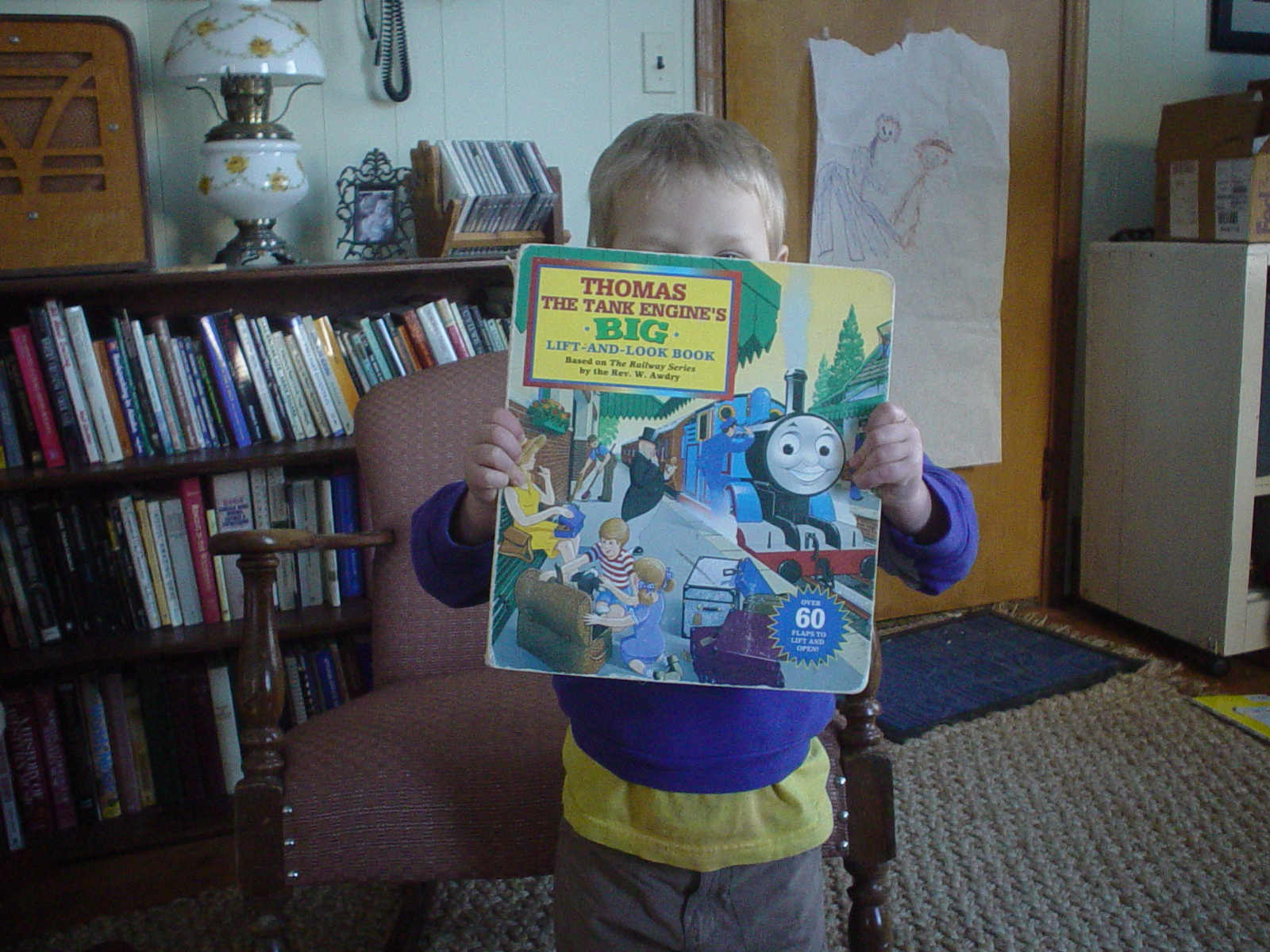
In February, the actual scene might look more like this: I am in a rocking chair, holding a book. It is not Plato’s Republic, but Thomas the Tank Engine’s Big Lift and Look Book. One child is on my lap because he was biting his sister at bedtime. The other is screaming that she is scared to be alone in her room. My drink of choice is Kahlua and cream, but I already drank it all. I didn’t bother putting the chocolate and ginger in a dish, but just ate them out of the bag while standing in front of the kitchen cupboard, keeping my back strategically turned towards the always-underfoot children. Dirty dishes are piled around the sink, and my husband is folding laundry on the couch. It’s looking like tomorrow’s dinner will once again be baked potatoes and carrot sticks. But at least I’ve got those jars of tasty ketchup that I canned in the summer.
For years now, I have regretted that Christmas is celebrated so early in the winter. Couldn’t people have waited until winter got good and nasty to have a big celebration? In December, even here in Minnesota, we can never be sure if we will even have snow for Christmas. In February, it’s a sure thing. In February, I am hungry for something to celebrate. I have become half-bear, convinced that hibernation would solve all my troubles. I, who love to get out of bed and go for a run at 5:00 on summer mornings, can hardly roll over by 8:00 on February mornings. I feel sleepy, swollen, and stupid; weary of the piles of clothes from which I must exhume myself every night for bed, weary of shoveling snow, weary of refereeing the ridiculous arguments and murderous brawls my small children have made their full-time occupation.

I know, the Christmas celebration lines up with the winter solstice, celebrating the return of the sun and longer days. And I do feel a glint of joy in February when I notice it is 5:00 and the sun is still shining. But, oh, how lovely it would be in February to saturate the house with the crooning of Nat King Cole, bake up a passel of Christmas cookies, fill up the calendar with parties and . . . the kids’ room with newly opened presents . . . and . . . hey, wait a minute, that sounds exhausting.

Skip it. The afternoon winter sun is radiating through the window, and I can just sit here and let it warm me, with no mental stress over cookies I’m not baking, parties I’m not planning, or even weeds I’m not pulling or gorgeous summer day I’m not taking full advantage of. I’ll bet there will be brilliant stars out tonight, with moonlight glowing over the snow. Alright, February, I surrender.

Wrestling With Why

Researchers tell us that most humans only use 5-10% of their brain capacity. As I watch my small children, I am convinced that they are using much more than that. They are always busy creating, discovering, exploring, trying something new. I, however, find it easy to believe that I’m only using a tiny fraction of my brain capacity. I have to work hard at creating, learning, trying new things. It’s no longer my natural inclination. To my children, it seems effortless.

I spent much of last year gorging on the writings of Madeleine L’Engle, a noted author whose “children’s novels” are plenty good reading for this adult. While pondering the generation gap and the sometimes-rebellious behavior of adolescents, L’Engle wrote in her reflective book A Circle of Quiet, “. . . the challenge I face with children is the redemption of adulthood. We must make it evident that maturity is the fulfillment of childhood and adolescence, not a diminishing; that it is an affirmation of life, not a denial; that it is entering fully into our essential selves.”

Hmm. Is it possible that children’s natural inclination towards discovery and creative thinking is something that should be encouraged, developed to even greater heights as they move into adulthood? Is it possible that the rebelliousness we’ve come to expect from adolescents mainly exists because the adult world for which we are preparing them is seriously flawed, because this world commands them to give up the seed of life and joy with which all children are born? Do we ask them to stop feeding the very thing that many of us go seeking in our midlife crises?

Currently I’m reading True Believers Don’t Ask Why by John Fischer, which I found on a ‘free books’ table at a local church that was cleaning out their library. Fischer’s book was published in 1989, but applies all too well today. Fischer, a singer and writer of the 1960s Jesus movement, wrote in this book that the youth of the 1980s were disappointingly less radical than he, a then middle-aged man, was.

Fischer wrote that this generation was much more interested in answering “how-to” questions rather than “why” ones. “How-to” questions are easily answered by the appropriate specialist. Answering “how-to” questions ensures success in an endeavor, and assumes that the answer is out there, fully obtainable if one knows who to ask.

“Why” questions, however, rarely have concrete answers. The same “why” questions have been asked and explored over and over again through the millennia of human history. Those who have wrestled with them have soared and suffered, produced brilliant work and been driven to madness – but have rarely remained the same after the struggle as they were before.

A person or generation who never asks “why” questions loses a sense of wonder, lacks the wisdom that the world, life, faith, everything true, is bigger than words, cannot be contained in a concrete answer. This person or generation lives superficially, fearful of new ideas and different perspectives, using not more than 5-10% of their brain power to explore the world around and within them.

So here’s to the askers of “why,” including my own especially fervent questioners Luthien and Silas. May the life I live encourage their continuing quests. May each of us grown-ups be a little more courageous this week in facing the “why” questions we’ve all-too-successfully grown out of asking.

“Our Need for Everything . . . “

This morning I am reading Saving Paradise: How Christianity Traded Love of This World for Crucifixion and Empire (Rita Nakashima Brock and Rebecca Parker) and came across these words quoting Ephrem the Syrian (c. 306-373):

“The inhabitants of the world fill in the common need from the common excess. We should rejoice in this need on that part of us all . . . Our need for everything binds us with a love for everything.”

I’m thinking today of the World Vision Christmas catalog that my young daughter Luthien and I were paging through a few days ago. You could buy medicine for sick children, food for hungry ones, animals to provide a livelihood for destitute families – and while the pictures were vibrant with joy and my daughter was enthusiastically deciding what she wanted to give, I found myself crying as page after page lengthened the list of needs. There is no way our family can give enough to meet all those needs.

But what a preposterous idea! Our family is one small piece of this circle of love and need. How often I forget, in this individualistic culture, that no one person or family or group is charged with saving the world. Neither is anyone only needy or only loaded with gifts for others. We are all of us needy, and we can each give something – a smile, a well-spoken word, a sum of money, a box of food, an hour of our time – as we affirm the life, the need, the beauty, love, and pain that make up the reality of the world in which we live.

May we all be courageous enough to live more faithfully within this circle of need and love, of vulnerability and generosity.

Sustaining Motion

I used to believe that with the right amount of effort, therapy, money, discipline, and time, I would achieve the perfect state and then maintain it. I would live in the right town, in the perfect house, with the right person, drive the right car to the perfect job, be the right weight, achieve the perfect hairstyle, have the furniture arranged and the yard landscaped just right . . . and then hold that pose – forever! Perfect! Permanent!

One moment in the life of my late grandmother, Hazel Dominguez Tindall.

One frozen moment in the life of my late grandmother, Hazel Dominguez Tindall.

But not possible. Nothing is ever standing still. My body moves involuntarily with every breath, my heart pumps without my conscious consent, my cells are factories in constant production. Even when I die, my body will not be still, as decay takes over and every atom moves on to become part of something else. The earth on which I stand spins at nearly 1,000 miles per hour, one small mover in a vast expanding universe.

Plenty of movement is required simply to sustain life. But the time and place where I live has “progressed” to a state far beyond simple sustenance. I can get anywhere in the world in a matter of hours or days, learn about anything with a few mouse clicks, communicate my ideas through a plethora of instant media options. Because so much is possible, it takes plenty of energy for me simply to sift through it all, to decide what I will do, buy, wear, eat; and to deal with my own and other people’s expectations and reactions to my choices.

With all this motion around and within me, I find deep healing in the disciplines of rest and reflection. Rest is not perfect stillness, but a deliberate slowing down, setting aside the oars and moving with the water rather than forcing my way through. Reflection is not absolute silence, but a thoughtful tuning out of the noises I ordinarily attend to, so that I can listen to the echoes of the recent moments through which I’ve moved.

Beneath all the layers of progress-driven sound and light, life is still a flowing river. The more I try to hold a living thing in a freeze-frame squeeze, the more energy I must expend – and even as I inflict any level of un-natural stasis upon that thing – be it my face, a relationship, a belief system or a zucchini, it slowly begins to wither in my grasp – or speeds up the natural rhythms that end in death, another way of saying the same thing.

This is why the bugs and baby bunnies my daughter captures usually convalesce until either they are released or they die. It explains why my marriage has suffered seasons of stagnancy, and why the fresh greens I stash in my refrigerator often need to be re-classified as compost.

Healthy living things are always growing. Evolution is the heartbeat of life. We deny the goodness of life when we try to force living things to stand still. Paradoxically, we affirm the goodness of life when we regularly and deliberately slow the pace we’ve picked up trying to keep up with those Joneses, and choose instead to move with the rhythm of the forces that sustain us.

Reaching Maturity, or, If I Were a Tomato

On Monday evening my proud papa showed my youngsters video clips he had taken of me and my band almost ten years ago. There we are, up on the big stage, under the bright lights, playing our twenty-something hearts out. “We were young and we were improvin’. . .”

the glory days for rock band St. Andrew's Descent

the glory days for rock band St. Andrew’s Descent

Mellencamp was on to something, although I haven’t always thought so over the years. Wrinkles, gray hairs, extra pounds and stretch marks don’t seem like an improvement. But they are simply markers of the real life I’ve been living. The wrinkles around my eyes record the smiles and laughs that have crinkled the skin there again and again. The creases between my eyebrows show the grip of stress, grief, and anger. The gray hairs grow from a head that has pumped out thoughts and dreams at the pace of a Chinese toy factory. The poochy tummy and the stretch marks tell about the two people I co-created, nourished, carried and bore into the world.

These days I don’t look back as wistfully as I used to. I can almost laugh at – I mean with – no, I mean at – the profoundly serious girl up there on the stage, who scans every audience for a talent scout and will soon cry herself to sleep the night she learns of her first pregnancy, certain this means death to her creative life.

Small children, it turns out, are small for only two or three blinks of an eye. This is a great relief and an eternal sadness.

yes, they dress themselves!

yes, they dress themselves!

They are also loaded with material – not only the fecal variety, but the sort of material every writer seeks – magical moments, ironic situations, hilarious word usage, and heart-stabbing lovelinesses and tragedies of all sorts.

On Tuesday morning I took my guitar down from the wall and began to play and sing. My two-year-old Silas hurried from the other room, smiling and dancing like sun-sparkles on a forest stream. It was a stellar performance. I totally connected with the audience. I’m pretty sure I’ll get another call soon (“Mommy! Play my song again!”).

Lately I’ve discovered that the songs and performances I do create, when I take the time, are better than those of ten years ago, and they often take less effort. I think this is about reaching maturity.

This past spring I bundled up and went out to the garage, where I poked tiny tomato seeds into small pots of soil arranged on an old cookie sheet. I brought the cookie sheet into the house and set it on top of the refrigerator so the seeds could stay warm and germinate.  It took about a week before I saw more than soil in those pots. It took even longer for the tiny seedlings to grow into recognizable tomato plants that could stay outside overnight alone.

Once I finally got the plants outside, the tender leaves soaked up sunlight and used that energy to make more leaves, which all soaked up more sunlight and made more leaves, so that the plants grew exponentially. A couple weeks ago, green tomatoes began blushing into red, and I knew that the plants were doing what the seed packet had said they would do in the prescribed number of days – reaching maturity. Now every day I spot another brilliant red tomato, standing out vividly from the surrounding green leaves.

If I were a tomato plant, I think I would currently be putting out yellow blossoms. These blossoms are more interesting than the green leaves I have spent much of my life to produce, but it gets even better! If I keep growing, one day I will make brilliant red fruit with the power to nourish and cheer whoever finds it. I don’t miss those spindly seedling days. And I’m not seeking to preserve these yellow flowers. I’m going for the juicy red fruit. I’m reaching for maturity. I’m still young and still improving.