Mob Justice

“Many that live deserve death. And some that die deserve life. Can you give it to them? Then do not be too eager to deal out death in judgement. For even the very wise cannot see all ends.” – Gandalf, in J.R.R. Tolkien’s Lord of the Rings trilogy

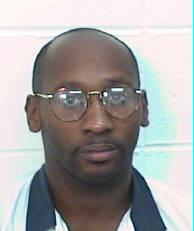
The execution of Troy Davis is scheduled for tomorrow, slating him to be next after 33 people who have already been executed in the United States this year.

Some – including notable public figures such as Pope Benedict XVI, Desmond Tutu, and Jimmy Carter – say there is too much doubt in Troy Davis’s case, that our justice system may likely be killing an innocent man. The prosecuting attorney says differently, in this CNN article in which he was interviewed. I found the last quote especially interesting –

“Lawton [the prosecuting attorney] said he’s against mob justice of any kind.

“‘Would it be different if all these people were agitating to have someone executed? The criminal justice system should cow in the face of that kind of mob action? No, we would all say no,’ he said. ‘That’s not the way the system is supposed to operate.'”

No, the system is supposed to operate coldly and correctly, immune to human whims and emotions. I know.

But death is just so . . . final. Are we sure about this? Really?

The Alien Race of Giants

Here’s a little bedtime reading . . .

The Alien Race of Giants
8/23/11 Julia Tindall Bloom

Around the campfires of some distant world
Stories are told of a race of giants
Who walk their planet continuously
From the first light of their sun
Right up until darkness
Sometimes even longer.

Then for the other half of their planet’s spin
They lie down and look dead
They hibernate all through the time of darkness.

When they rise with the light of their sun
They are terribly hungry
And half-dead
So they eat birds’ eggs and animal flesh
And drink a magic potion of roasted ground tree seeds.

These giants, it is said,
Can go on living like this for thirty-thousand turns of their planet –
Or more!

And then, usually, there is silence
As this stunning idea is pondered.

To E or Not to E?

Okay friends, help me out.

I think I want an e-reader.

The thought of all those free public domain books just there for the downloading! The portability. The clutter reduction. The instant access. The saving of trees! And yes, I admit, the novelty of a new gadget.

But then, there’s the electricity consumption – minimal though it may be. And the purchase price. And the complication of gadgetry (it could break or crash or I could lose it). And the piles of books I already own that I have not read. And the many more used books I could buy without any more trees needing to be cut.

Not to mention the library, a beautiful building just blocks from my house where I can get many of the books I want (though not all, not even through the magic of interlibrary loan).

But now even the library has digital books available!

What would you say to an one such as I? Fire away.

Proud Papa

Okay, it feels like time to post something again. Summer in Minnesota must be savored, which is why I don’t spend much time here in bloggyworld. But here’s a poem I wrote last month, based on a random idea that popped into my head as I was waking one morning. Don’t look for any deep philosophical point please.

Proud Papa
by Julia Tindall Bloom 7/24/2011

At the annual meeting of the divine council
(Which in divine time happens annually but in earth time has never yet happened at all)
God pulled out his wallet
And with a flick of his wrist
One hundred billion photos folded out like a long long tongue.
“My kids,” he beamed.
The rest of the divinity smiled politely,
Verbally noticed family resemblances,
Told God he was a lucky guy with a beautiful family.
But each to oneself they wondered,
“Are those children home alone?”

Speciality

In case you missed it, there is some great discussion going on around the last post, which was mainly a link to this article. The main topic of interest to myself and the commenters was this seeming paradox between our society’s push towards telling everyone they are “special,” while simultaneously minimizing competition and downplaying both strengths and weaknesses of individual people so that no one feels badly.

Last night our four-year-old son Silas went to “sports camp” at the park where they had a little track meet for the campers. Silas came home with a [plastic] gold medal around his neck that said “Winner,” and I was immediately suspicious. Did everyone get a gold medal? My husband Nathan said that Silas won the long jump. I still wasn’t sure that meant anything in particular. Maybe all the kids “won” the long jump simply because they jumped. But upon further inquiry, I learned that Silas indeed was the first-place long jumper. He also showed me a purple “participant” ribbon that he (and all the other kids) won for participating, and a third-place ribbon for another event in which he actually won third place. I was relieved that our local parks and recreation department is not afraid of competition like the coach who was interviewed in the article. (And of course I was also proud of my little guy!)

About an hour later our seven-year-old daughter Luthien came home and saw Silas’s gold medal around his neck. Her first response was an indignant, “What? Where did he get that? That’s not fair! I didn’t get one!”

I explained that Silas had won the medal in his track event. “But that makes me feel bad, Mom, because I didn’t get a medal!” she insisted. And again today, she came across Silas’s ribbons and was freshly outraged at the thought that he won awards which she did not.

Hopefully she will work through this and grow into adulthood with an ability to both celebrate the beauty and excellence and forgive the failings of herself and everyone else.

I do believe that everyone is special. Or perhaps unique, as Jodi noted in her comments on the last post. For some reason, we often equate the word “special” with the idea of being more important. But really the word means very much the same as “unique,” and it shares a root with “species.” Each of us is, in a way, a singular species. No one of us is more important than any other, or self-sufficient, but each of us does have strengths and weaknesses which can be celebrated and forgiven, respectively. Celebrated and forgiven. Not minimized, qualified, smoothed out and laden with disclaimers.